
Emergency Air Duct Cleaning Near Me: What Roseville Homeowners Should Do First
If you’re smelling something coming out of your vents that wasn’t there yesterday, the worst thing you can do is run the system while you search for a phone number. Every minute the air handler runs pushes that contaminant further into every duct branch in the house. Shut the system off at the thermostat first, then figure out what you’re dealing with. That one move buys you time and keeps the problem from spreading.
We’re the team at Duct Cleaning Roseville, and we’ve walked into enough of these calls to know that panic usually makes the mess worse. If you’d rather not sort it out yourself, call (855) 473-9048. We answer 24/7, with fast dispatch from 7am to 7pm, Sunday through Friday.
What Actually Counts as a Duct Emergency in Roseville?
A duct emergency is any situation where contamination is actively moving through your system and into your living space. Rodent evidence, sewage or burn odor in the supply air, and water intrusion into ductwork after a leak or flood all qualify. Dusty vent covers and reduced airflow do not. They’re worth fixing, but they’re not emergencies.
The distinction matters because it changes how fast you need to act and how carefully the job has to be set up. Here’s how we sort the two:
- Emergency: Droppings or nesting material visible at a register, a sewage or chemical smell that appears only when the air runs, scorch or burn odor after an electrical issue, or standing water or damp insulation inside ductwork following a plumbing leak or flood.
- Urgent but not immediate: A sudden jump in allergy symptoms at home, a musty smell that shows up now and then, or one room that’s gone noticeably weaker than the rest.
- Not an emergency: Visible dust on the grilles, general “we haven’t done this in years” cleaning, and minor airflow quirks that have crept up slowly.
If you’re in Roseville and you’re not sure which bucket your problem falls into, describe it out loud to yourself. “It smells only when the heat kicks on” tells you something. “It always smells” points somewhere else entirely.
The First 30 Minutes: A Step-by-Step Response
Your first move is to stop the air handler, then document what you see before anyone touches anything. Shut the fan off at the thermostat and leave it off until you’ve had eyes on the problem. Running the system is what turns a localized issue into a whole-house one.
- 1
Shut the system down. Set the thermostat to off, not just a lower temperature. The fan is the engine that distributes contamination.
- 2
Find your return air location. In most Roseville homes there’s one or more large return grilles that pull air back into the system. That return is the entry point for anything moving through the ducts.
- 3
Inspect the accessible registers with a flashlight. Look inside the supply and return openings you can reach. You’re checking for droppings, nesting material, standing moisture, or visible dark growth.
- 4
Photograph everything before you disturb it. Photos of what you found help the technician understand the scope and help you confirm afterward that the work addressed the actual problem.
- 5
Close off the affected room if you can. Shut the door and, if the smell is strong, tape a plastic sheet over that room’s registers. It’s a temporary measure, but it slows the spread.
Notice what’s not on that list: spraying anything into the vents. Air fresheners and disinfectant sprays mask odors and add chemicals to a system you’re about to have cleaned. Skip them.
Why a Rushed Cleaning Can Make Things Worse
A rushed cleaning without proper containment can aerosolize rodent droppings, mold spores, and settled dust right into the air you’re breathing. Worse, it spreads that material into duct branches that were clean before the technician arrived. Speed without setup isn’t cleaning. It’s redistribution.
This is where equipment separates a real emergency response from a shop-vac with a long hose. Negative-air containment, the kind of setup used in commercial remediation, keeps the work zone under pressure so debris moves toward the vacuum rather than into the room. In a routine cleaning that matters. In an emergency with rodent intrusion or confirmed mold, it’s the difference between solving the problem and seeding it across the house.
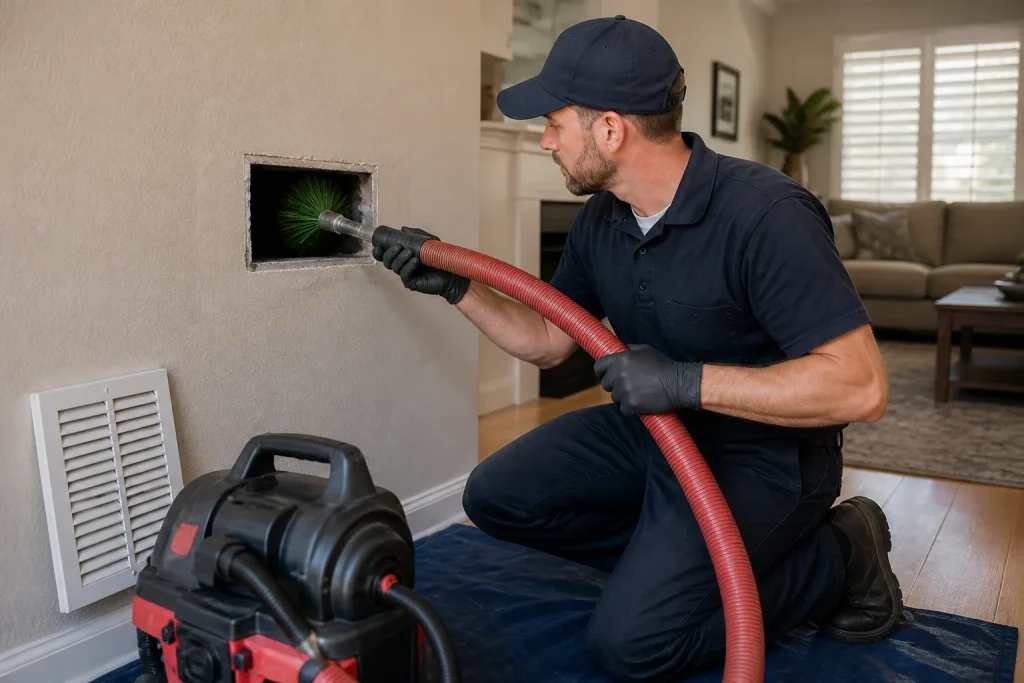
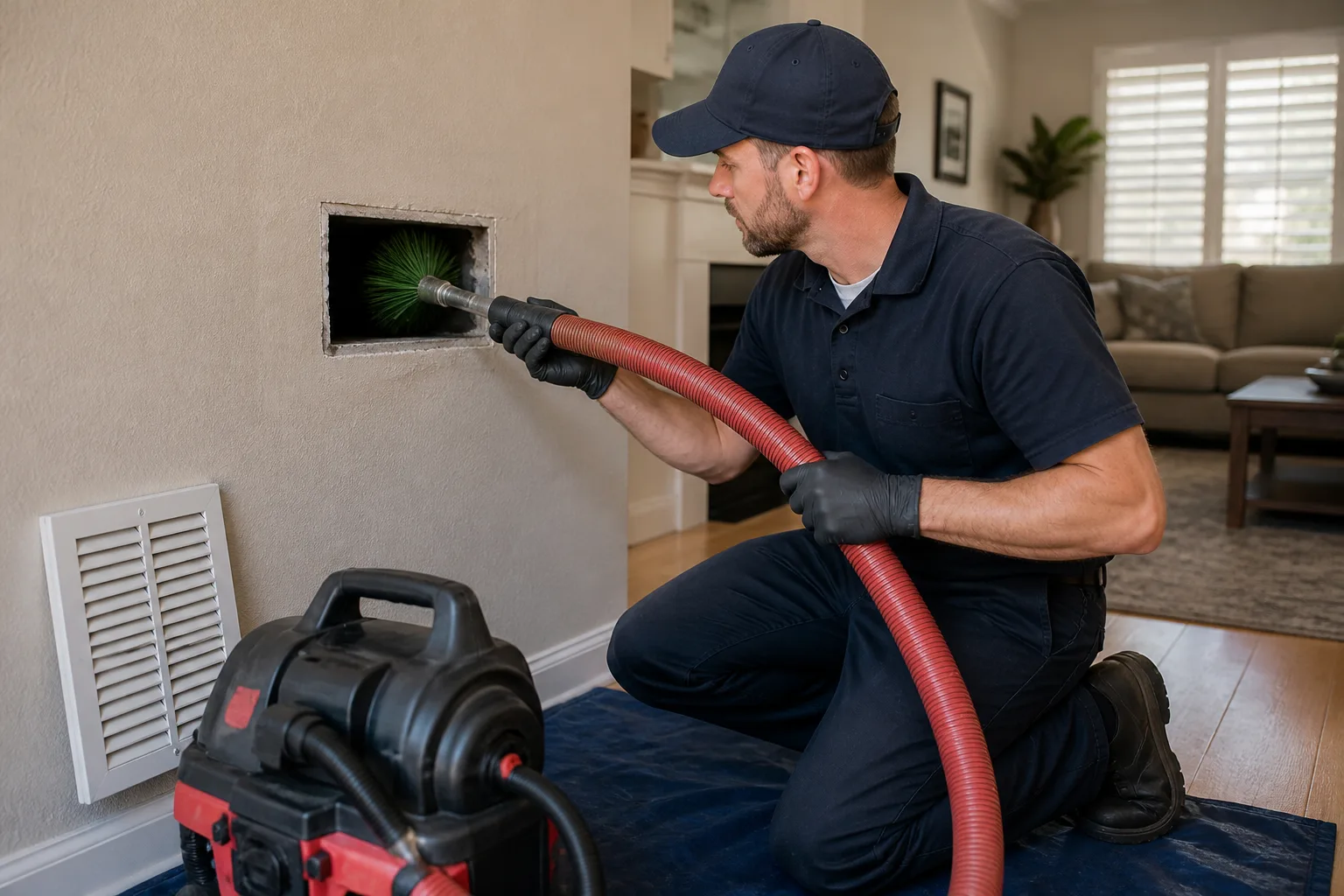
That’s the standard we hold to. We run Abatement Technologies negative-air equipment and Nikro HEPA-rated vacuum extraction, which captures particles down to 0.3 microns instead of just stirring them up. Brush agitation from a Rotobrush system dislodges compacted material from the duct walls so the vacuum can actually remove it. Professional-grade equipment, not shop-vac shortcuts. Our technicians have up to experience, and they’ll tell you plainly that a slow, contained job beats a fast, sloppy one every time.
What to Tell the Dispatcher When You Call
Tell the dispatcher what you smelled, what you saw, and where you saw it, in that order. Specifics let the responding technician load the right equipment for your actual problem instead of arriving with a standard cleaning kit and improvising.
Here’s what a useful call sounds like:
- “There’s a sewage smell that only shows up when the heat runs.”
- “I found droppings inside the return grille in the hallway.”
- “We had a water heater leak and the insulation inside a duct run looks damp.”
- “There’s a scorched smell and I’ve already killed power to the system.”
Those four descriptions each call for a different setup and different safety precautions. “My ducts need cleaning” tells the dispatcher almost nothing. Also mention whether anyone in the house has asthma or allergies, because it changes how tightly the job has to be contained. A good dispatcher asks these questions anyway. Answering them up front saves you a second visit.
One note: if anything is burning, or if you smell gas, this isn’t a duct call anymore. Get out of the house and call your utility.
Roseville Triggers That Send Homeowners Searching
Post-wildfire smoke and summer attic heat are the two most common reasons Roseville homeowners find themselves searching for emergency duct help. Wildfire smoke infiltrates through the return air, and the system pulls it into the house while it’s running. Summer attic heat, meanwhile, causes condensation inside poorly insulated flex duct, and that moisture sets up the conditions for mold growth over time.
Smoke residue is its own problem. It leaves an oily film inside the duct surfaces that traps new dust and holds the smell. Ordinary cleaning that skips HEPA extraction tends to redistribute that film rather than remove it. Meanwhile, that same nearby attic heat is baking any flex duct with worn or missing insulation, and the condensation that forms inside becomes a moisture source a cleaning alone can’t fix. Sometimes the honest answer is that the duct run needs repair before cleaning does any lasting good.
We work across Roseville, and the patterns repeat. Older neighborhoods with retrofitted flex duct, newer builds with long attic runs. The trigger is usually the same, and the first response is too. Shut the system off. Then call.
When to Call a Pro
Call a professional when the contamination is in the ducts and not just on the grille, when you can’t safely inspect the inside of the system yourself, or when the smell or evidence returns after you’ve tried the basic steps. A flashlight tells you what you can see. It can’t tell you what’s settled three feet into a run behind a bend.
This is also the point to be firm about what equipment is coming into your home. Ask what containment setup the technician uses. If a company can’t answer, that’s your answer. We clean it, then we can repair it if the ducts need it, no second contractor needed. That matters most in emergencies, when a damaged duct discovered mid-job can be sealed in the same visit instead of leaving you to schedule someone else.
Related services in Roseville: if the problem turns out to be routine buildup rather than an emergency, start with air duct cleaning and plan it properly. And if the lint trap or the long dry time is what got your attention instead, dryer vent cleaning is a separate service for a reason.
The Bottom Line
Shut the system off before you do anything else. Photograph what you find. When you call, describe the smell and the evidence plainly so the right equipment comes with the technician. Then insist on containment. It’s the detail that turns a cleaning into an actual fix, and it’s the one most homeowners don’t think to ask about until it’s too late.
If you’re in Roseville and need help, Duct Cleaning Roseville offers free estimates. Call (855) 473-9048. We answer 24/7. Fast dispatch from 7am to 7pm, Sunday through Friday. You’ll get a flat price per system agreed before any work starts, and before-and-after photos of your own ducts.
Need a full-system clean from a team that runs dedicated duct equipment? See our duct cleaning Roseville page for the details.
Frequently Asked Questions
If something active is entering your air, it’s an emergency. Rodent droppings, sewage or burn odors, and water inside the ductwork count. Dirty grilles and slow airflow don’t. When in doubt, shut the system off and describe what you smell and see to a professional. Call (855) 473-9048 for an exact quote. Estimates are free.
No. Running the air handler pushes contamination deeper into every duct branch, which makes the eventual cleaning harder and more involved. Shut it off at the thermostat and leave it off until you’ve had the system looked at.
No. The price is set per job by the written estimate, and you’ll see it before work starts. We give a flat price per system, not a per-vent rate, so there’s no surprise once the technician is on site. Call (855) 473-9048 and we’ll walk through it. Estimates are free.
If you smell smoke inside when the system runs, shut the fan off and get the system inspected rather than waiting for the smell to fade on its own. Smoke residue sticks to duct surfaces and traps new dust. HEPA-rated extraction is what actually removes it. Call (855) 473-9048 and describe what you’re noticing. Estimates are free.
Written by the team at Duct Cleaning Roseville.
Need Air Duct Cleaning Help?
Call Duct Cleaning Roseville - licensed & insured, here with fast help in Roseville.
(855) 473-9048