
Last updated November 14, 2026
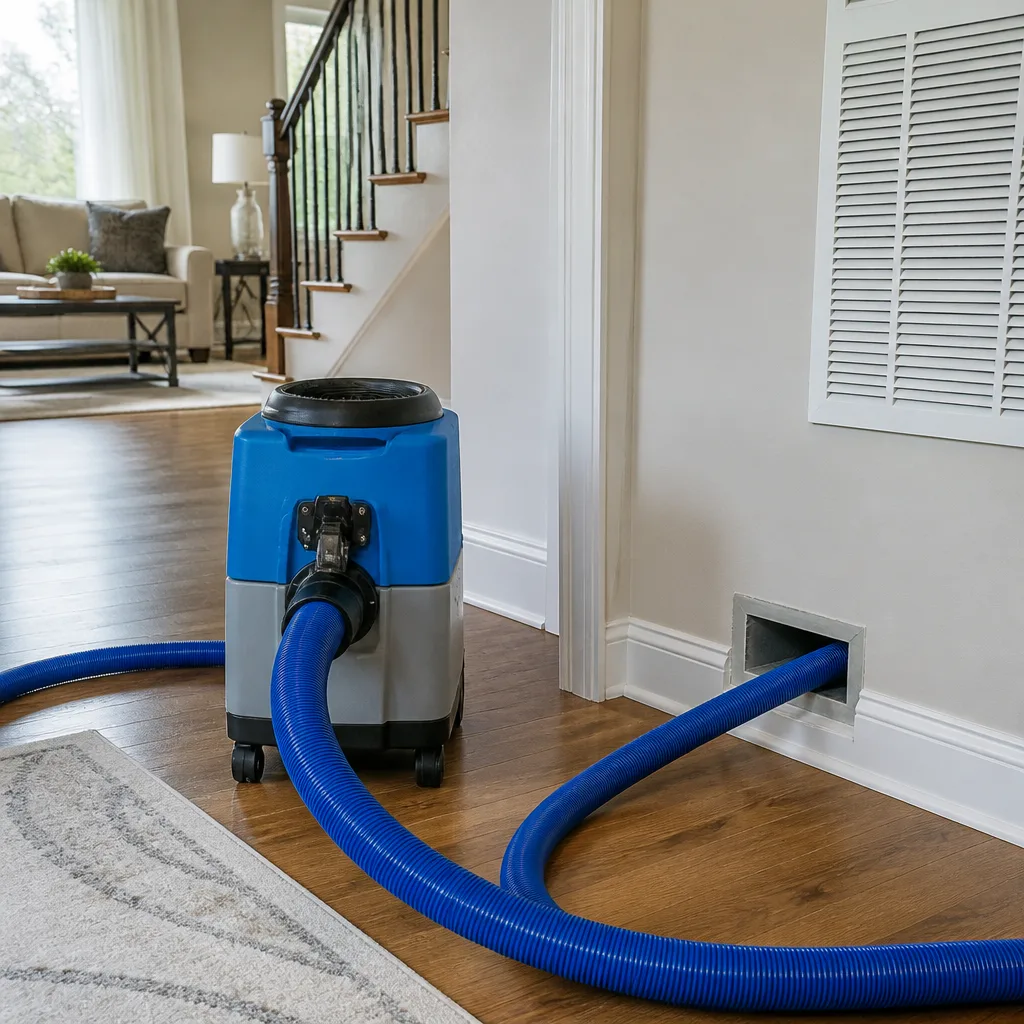 Whole-home duct cleaning
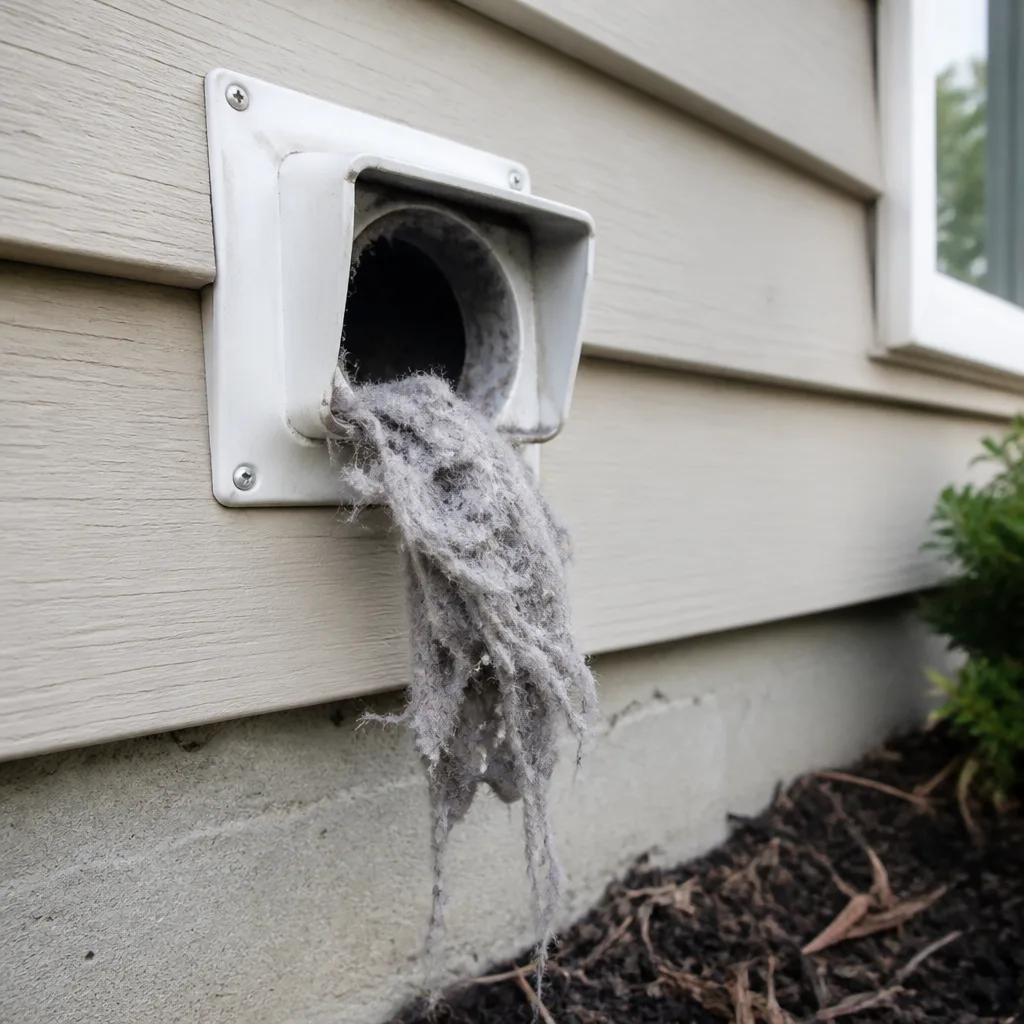 Dryer vent cleaning
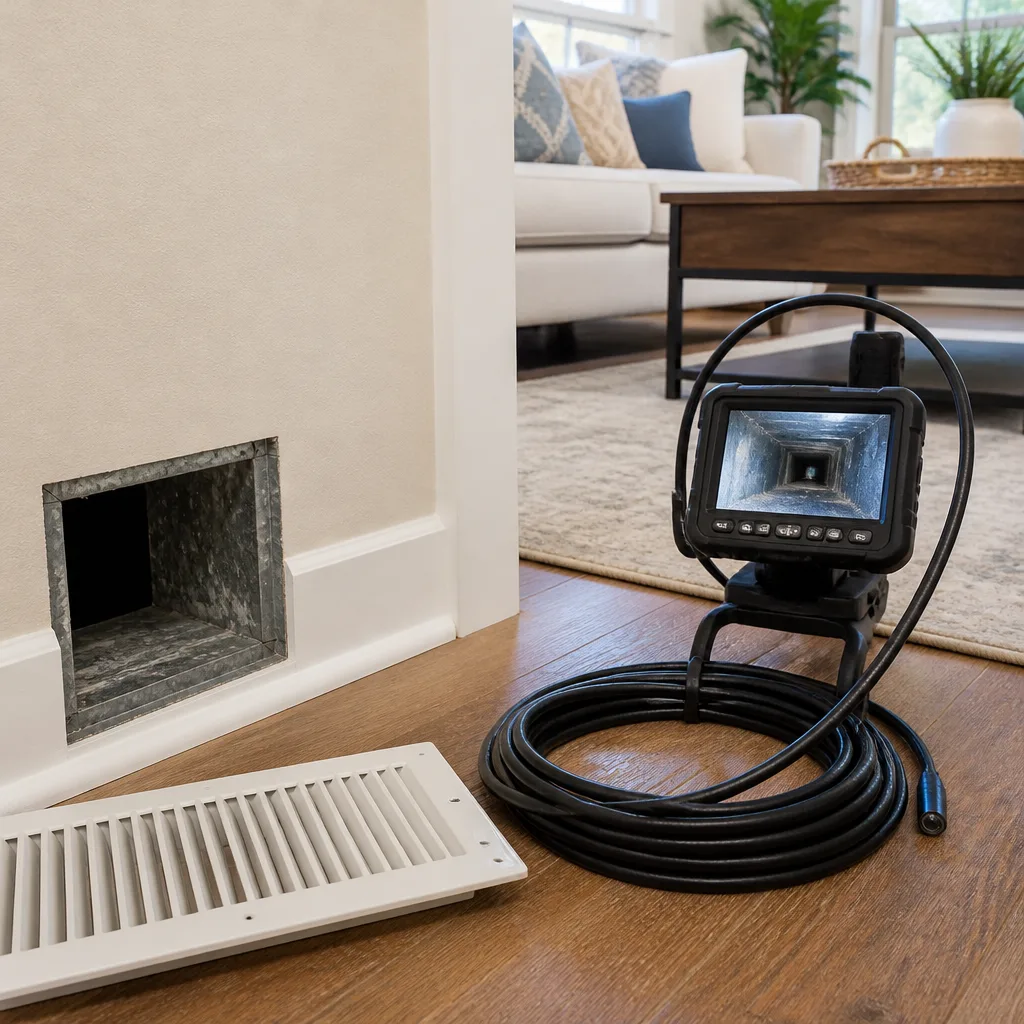 Camera inspection
 Sanitizing & deodorizing
Whole-system duct and dryer vent check with before-and-after photos - you see exactly what came out of your vents
That "$99 whole-house special" is a bait ad - the real number appears once they are in your hallway, or the "clean" is a shop-vac at the register. We photograph the inside of your ducts before and after instead.
Choosing the Right Air Duct Cleaning Brand: A Buyer’s Guide for Roseville
There is no Carrier or Trane of duct cleaning. Homeowners know furnace brands, water heater brands, even thermostat brands by name. Nobody knows a duct cleaning equipment brand, and that blind spot is exactly where bad hiring decisions happen. A company name on a van tells you almost nothing about what will actually happen inside your ductwork. What matters is which equipment systems the company operates, because those systems represent different technical approaches to different contamination problems. This guide explains what Rotobrush, Nikro and Abatement Technologies machines actually do, why the difference matters in Roseville homes, and how to verify equipment claims before you book anyone.
Quick Answer
The right air duct cleaning brand in Roseville is the one that owns and operates multiple equipment systems (brush-agitation, HEPA vacuum extraction, and negative-air containment), can name the specific models, and matches the method to your duct problem rather than forcing every job through one machine. Ask for model numbers, ask which system they plan to use on your home and why, and confirm the technicians are trained on that equipment. A company that can answer those three questions clearly is usually the one worth hiring.
Styles & brands we work with
- Whole-home duct cleaning
- Dryer vent cleaning
- Camera inspection
- Sanitizing & deodorizing
Table of Contents
- Why Duct Cleaning Brands Are Invisible to Homeowners
- What Rotobrush Systems Are Designed For
- What Nikro Vacuum Systems Provide (and Why CFM Matters)
- What Abatement Technologies Equipment Adds
- Why a Contractor Running All Three Systems Matters
- How to Verify Equipment Claims Before Hiring
- Roseville Homes and the Duct Problems They Actually Have
- Cleaning and Repair From One Company
Why Duct Cleaning Brands Are Invisible to Homeowners
Every other trade has its recognizable names. Furnaces have their manufacturers. Air conditioners have theirs. Duct cleaning has machinery, and that machinery lives in the background where homeowners never see it. As a result, most buyers judge companies on the only things visible to them: the price on a coupon, the look of a website, the tone of a phone call. None of those tell you whether the technician arriving at your door has the equipment to do the job properly.
This is not a small gap. Duct cleaning done with inadequate equipment can make indoor air briefly worse, because loose debris gets disturbed without being captured. The vacuum a company brings determines whether contaminants leave the duct or get stirred into your living space. The brushing method determines whether compacted debris actually breaks free or just sits there looking cleaner.
So the brand question is really an equipment question. When we talk about brands on our own jobs, we mean Rotobrush for brush-contact agitation, Nikro for HEPA-rated vacuum extraction, and Abatement Technologies for containment-grade negative air. Those are three different answers to three different problems. A company that only carries one of them will apply it to every job, whether or not it fits.
For Roseville homeowners, this matters more than it might elsewhere. Much of the city’s housing stock is tract construction from the 1980s through the 2000s, and a lot of it runs on flex duct. Flex duct is corrugated on the inside, which gives debris thousands of tiny ledges to settle on. It also kinks and sags more easily than rigid sheet metal. The right cleaning method for flex duct is different from the right method for a rigid trunk line, and a company that knows both will say so when you ask.
What Rotobrush Systems Are Designed For
Rotobrush systems are built around a simple principle: dislodge debris with physical contact while vacuuming at the same time. A rotary brush on a flexible shaft travels through the duct run, spinning against the duct walls. At the same time, the machine pulls air and loosened material back into a collection unit. The brush does the work that suction alone cannot, which matters because settled dust inside a duct is often compacted into a layer that a vacuum will skip right over.
This dual-action design is why brush agitation is the industry benchmark for residential ductwork. Here’s what that looks like in practice:
- The brush contacts the full interior circumference of the duct, including the ridges in flex duct where fine debris packs in.
- Simultaneous extraction captures what the brush breaks loose before it can drift back into the room.
- The flexible shaft lets the technician reach the length of a run rather than just the first few feet near a register.
- Speed control on the brush head lets the technician adjust pressure so flexible duct is agitated without damage.
In Roseville’s flex-duct-heavy neighborhoods, this matters. We’ve seen duct runs in Roseville homes where a decade of dust had compressed into a visible coating on the underside of the duct, and no amount of vacuum-only work would have moved it. Brush agitation plus extraction is the combination that handles that kind of buildup. If a company shows up with suction equipment only and calls it cleaning, ask what dislodges the compacted layer.
What to ask about Rotobrush work
Ask which Rotobrush model they run and whether the technician on your job is trained on it. The brand is common enough to appear on marketing materials, but the operator skill is what turns the equipment into results. A trained technician knows how to work flex duct without overstressing it and how to sequence the brush pass so that the vacuum has time to capture what’s been loosened.
What Nikro Vacuum Systems Provide (and Why CFM Matters)
Nikro vacuum collection systems are the extraction half of a professional duct cleaning setup. Their job is to create enough negative pressure in the duct system that loose material is pulled toward the collection unit rather than into the house. Two numbers matter here, and most homeowners never hear them mentioned: filtration rating and airflow capacity, usually measured in cubic feet per minute, or CFM.
The filtration piece is easier to explain. Nikro units are rated for HEPA-level filtration, which captures particles down to 0.3 microns. For context, that’s small enough to trap fine dust, pollen, mold spores and much of what makes indoor air feel heavy during allergy season. A shop vacuum, by contrast, moves air but doesn’t reliably hold fine particles. It often exhausts them back into the room, which is why cheap duct cleaning can leave a homeowner sneezing more afterward, not less.
The CFM piece is the one that separates adequate equipment from impressive-looking equipment. A machine with high filtration but low airflow can’t move enough air through a long duct run to carry debris back to the collection unit. A machine with high airflow and poor filtration moves plenty of air and also blows fine dust into the living space. You need both. When you ask a contractor which Nikro system they operate, the answer tells you they thought about that balance or they didn’t.
- HEPA-rated filtration keeps captured particles in the collection unit instead of re-contaminating living areas.
- Adequate CFM ensures the suction reaches the far end of long duct runs, not just the branch nearest the machine.
- Negative pressure keeps the duct system under slight vacuum during cleaning so air flows toward the equipment, not out of the registers.
- Collection capacity means the unit doesn’t fill up and lose suction partway through the job.
HEPA-rated extraction means contaminants leave the duct, not just get stirred into your air. That distinction is the whole reason filtration ratings matter. Our air duct cleaning service is built around exactly that principle, and it’s why we ask which rooms in a Roseville home are used most before setting up equipment.
What Abatement Technologies Equipment Adds
Abatement Technologies equipment comes from the world of commercial remediation, not residential housekeeping. Negative-air machines and air scrubbers in that category are designed to contain contamination in a defined work zone, filter the air inside that zone repeatedly, and keep contaminants from migrating into clean spaces. They’re standard on commercial mold and contaminant abatement projects because those projects can’t tolerate cross-contamination.
A residential duct cleaning service that operates Abatement Technologies equipment is applying a commercial-grade containment standard to a house. That’s rare in this trade. It matters in a few specific situations:
- Smoke or fire-adjacent ductwork. Smoke residue clings to duct surfaces and carries odor. Containment plus air scrubbing keeps the residue from spreading while it’s being disturbed.
- Post-construction fine dust. Remodels generate drywall dust that settles deep in duct runs and re-suspends every time the system runs. Negative air keeps that dust out of occupied rooms during the cleaning.
- Mold-adjacent situations. Duct cleaning isn’t mold remediation, and we don’t offer that service. But when moisture issues have left duct surfaces in poor condition, containment-grade equipment during cleaning protects the rest of the house.
- Occupied homes during the job. Negative air lets the work proceed without the homeowner needing to leave or worry about air quality in adjacent rooms.
If you’ve had a kitchen fire, a major remodel, or a long-standing moisture problem in a Roseville home, ask the contractor directly whether they carry negative-air equipment. The answer tells you whether they’ve thought about containment or just about suction.
Why a Contractor Running All Three Systems Matters
Duct contamination isn’t one problem. It’s a category that includes compacted dust on flex duct, loose debris that needs high-capacity extraction, and contamination that needs containment. One machine handles one kind of problem well. A company that runs Rotobrush, Nikro and Abatement Technologies can match the tool to the situation rather than forcing the job to fit the equipment.
This is the core of our objection to the coupon-driven model in this trade. A company that owns one machine is economically pressured to use it on every job, which means the homeowner gets the same process regardless of what their ducts actually need. That’s not necessarily dishonest. It’s just limited. A tool matched to the job produces a different result than a tool forced onto the job.
The three-service focus behind our own work reflects the same logic. We clean ducts, we clean dryer vents, and we repair ductwork. That’s it. We don’t install HVAC systems, we don’t do insulation, and we don’t offer mold remediation. Specializing means the crew gets deeper in the specific skills each service requires, and it means the equipment we carry is chosen for those three jobs rather than spread across a generalist menu. Guardsman products round out the on-site kit for supporting work.
We also work with Honeywell and Aprilaire air quality products, which means a duct cleaning visit can include a look at the filtration setup itself. If your return filter is undersized for the system or the filtration is dated, we can say so and talk through an upgrade in the same visit. It’s a related piece of the same air quality picture, not a separate service line.
How to Verify Equipment Claims Before Hiring
Any company can write “professional equipment” on a website. Verifying what will actually arrive at your door takes about ten minutes and three questions. Do this before you book anyone in Roseville, because the answers separate companies that operate equipment from companies that mention it.
- Ask for the equipment model number. Not the brand, the model. A technician working from a Rotobrush brush system or a Nikro HEPA vacuum should be able to name the unit. If they can’t, that’s a signal that the equipment claim on the website may not reflect the reality of the job.
- Look the model up yourself. Manufacturer pages exist for every one of these systems. You’ll find filtration ratings, airflow specs and the intended use. It takes five minutes to see whether the specs fit a residential duct system and whether the machine is designed for the kind of cleaning you’re paying for.
- Confirm the technicians are trained on it. Equipment ownership and equipment operation are not the same thing. Ask whether the crew leader on your job has worked with the specific system and whether the company trains on a standard process. A confident, specific answer is what you’re listening for.
- Ask which system they plan to use on your home and why. This is the real test. A company that knows its equipment will ask about your duct material, the age of the home, and any recent remodeling or damage, then explain which method fits. A company that doesn’t will say “we use everything” or “the standard setup.”
- Ask whether they can repair ductwork. If the cleaning uncovers damage, and damaged ductwork is common in older flex-duct systems, you don’t want to hire a second contractor. Our duct cleaning Roseville work includes the option to talk through repair with the same team, which is one less handoff.
None of these questions require hiring anyone. They’re a filtration process. Most homeowners get clear answers within a single phone call, and the clarity itself tends to make the decision obvious.
Roseville Homes and the Duct Problems They Actually Have
Air duct problems don’t happen in the abstract. They happen in specific houses with specific construction histories, and Roseville has a few patterns that come up again and again. Knowing what’s common in your part of the city helps you ask better questions and understand what a contractor’s plan should look like.
The biggest factor is the age band of the housing stock. Plenty of Roseville neighborhoods built out from the 1980s through the 2000s used flex duct extensively for branch runs off the main trunk. Flex duct is fully practical and code-approved. It’s also corrugated inside, which gives settled debris more surface to grip. Homes from that era often benefit from brush-agitation cleaning as the primary method, because the duct walls need physical contact to release what’s stuck.
Roseville’s summers push systems into long continuous runs. Warm interior air returns through the ducts for months without a real break, and that extended runtime pulls a steady flow of fine dust through the system. Homes here often show dust accumulation that’s less about one dramatic event and more about thousands of ordinary hours of operation. The compounding effect shows up as uneven airflow to the rooms farthest from the air handler, or as a musty smell when the system first kicks on.
The dry months also matter. The Central Valley’s low humidity for much of the year makes fine dust mobile, and it also makes dryer vent lint especially combustible. Dryer vents in Roseville homes pack in lint year-round, and it’s worth remembering that a heavily clogged dryer vent is a fire risk, not just a maintenance annoyance. Our dryer vent cleaning service is separate for exactly that reason: it’s a different job with different equipment and a different safety rationale.
Cleaning and Repair From One Company
Duct cleaning sometimes uncovers duct problems. A disconnected joint in the attic, a crushed section behind a cabinet, a return line that was never properly sealed. When that happens, the cleaning results don’t hold, because air is still leaking out of the system instead of reaching the register. A homeowner suddenly needs a second contractor, and the cleaning has to be redone after the repair.
Offering air duct repair as a standalone service removes that handoff. Cleaning and repair are separate jobs, and repair is priced on its own written estimate, but they can be planned together so the system ends up tight and clean at the same time. In our experience across Roseville, duct damage is one of the most commonly skipped steps in this trade. It’s easier to sell a cleaning than to explain why the ducts also need attention.
If you’re hiring a company and you know there’s a damaged duct run in the system, ask directly whether they can repair it. If the answer is no, plan for the second contractor and budget the time. If the answer is yes, ask to see the repair scope written out before any work starts. Either way, the written estimate is what sets the final price, and you should have it in hand before the crew arrives.
Common Mistakes to Avoid
- Hiring on the coupon price alone. The number on a mailer tells you nothing about the equipment or the scope. It tells you how the company acquires customers. Ask what’s included and get it in writing before you book.
- Not asking about equipment models. “Professional-grade” is a phrase; a model number is a fact. A company that can name its Rotobrush or Nikro system has thought about what the equipment does, and one that can’t probably hasn’t.
- Assuming all cleaning produces the same result. Suction-only cleaning, brush-plus-vacuum cleaning and containment-grade cleaning solve different problems. A single-method company in a Roseville home with flex duct and heavy dust is working with one hand behind its back.
- Letting a contractor skip the dryer vent. The dryer vent is a completely different system with its own fire risk profile. If you’re booking duct cleaning, ask whether dryer vent cleaning is available from the same company, because it’s often the higher-priority job.
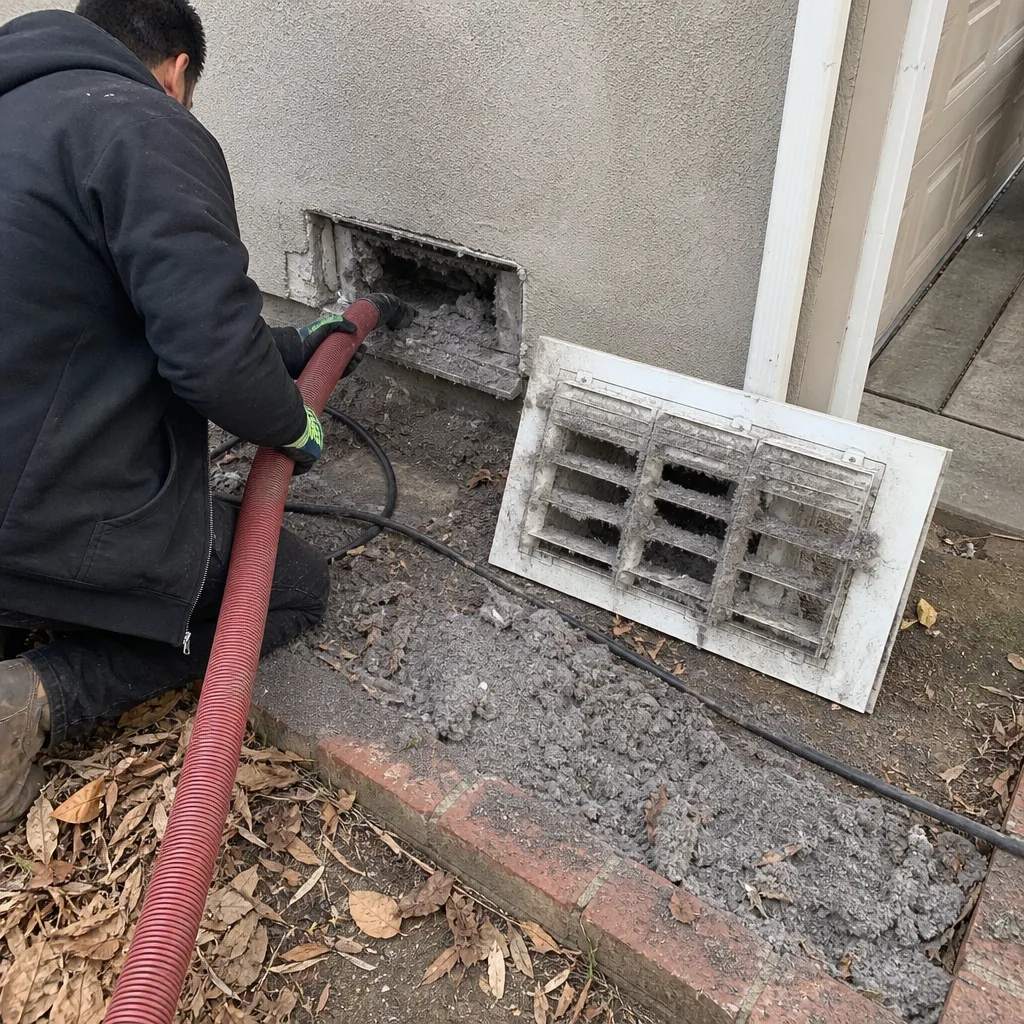
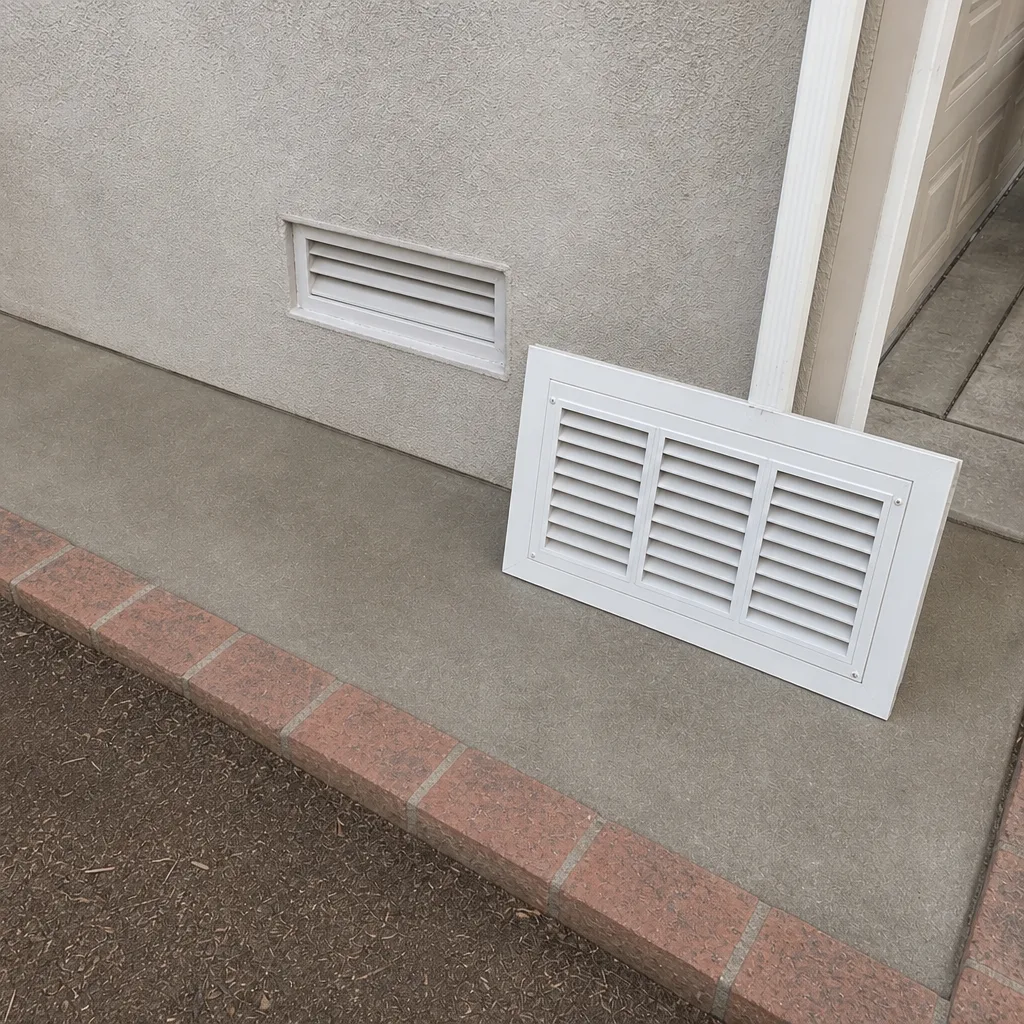
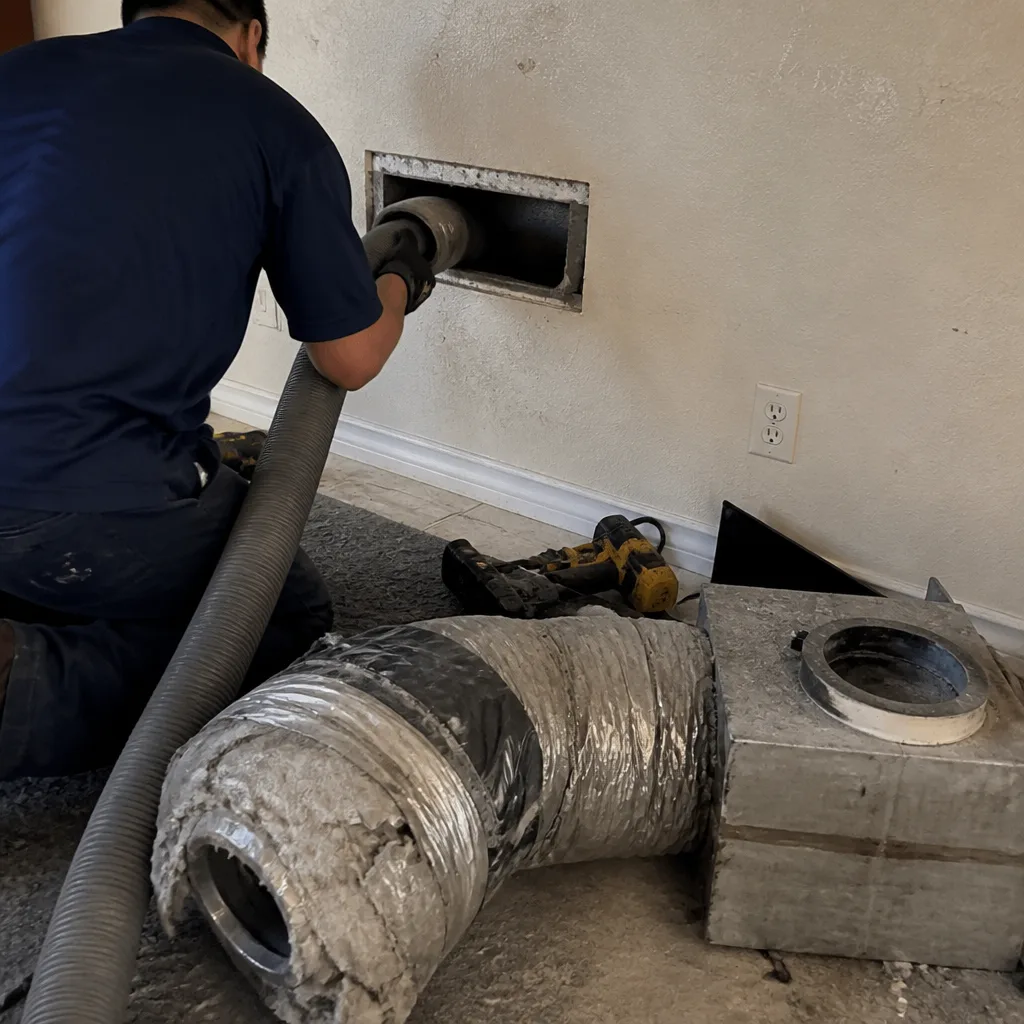
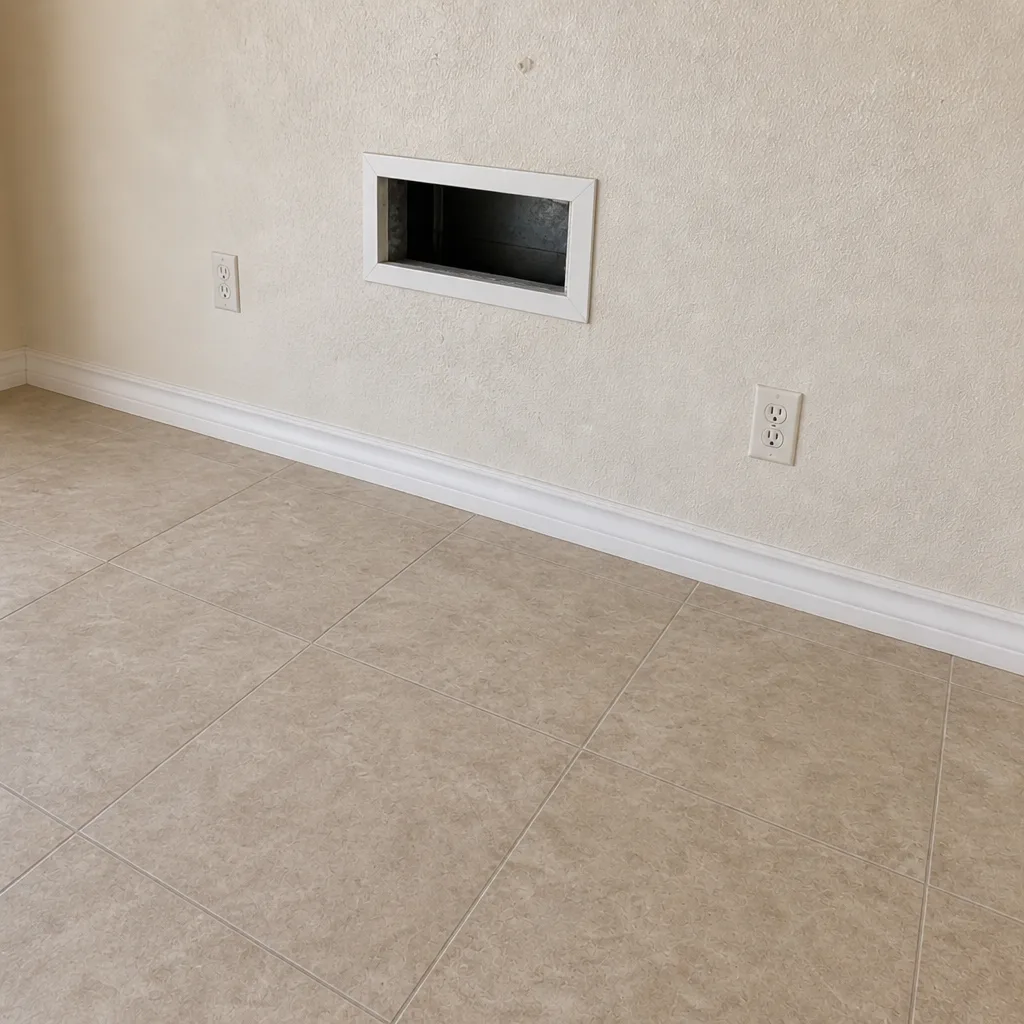
- Paying for cleaning without a before-and-after record. A contractor who takes photos of the ducts before and after the work is showing you the actual outcome, not describing it. Ask to see the photos of your own ducts as part of the job.
- Not asking about repair capability up front. Cleaning will sometimes uncover damage that requires sealing or replacement, and you don’t want to find that out after the crew has packed up. Ask the repair question at the phone call stage.
- Hiring a generalist HVAC company as the default. Generalists are fine for HVAC work. For duct cleaning specifically, a narrow-focus specialist will typically have equipment depth a generalist doesn’t, because the generalist’s equipment budget goes toward installation tools rather than cleaning systems.
See the difference
 Before
 After
 Before
 After
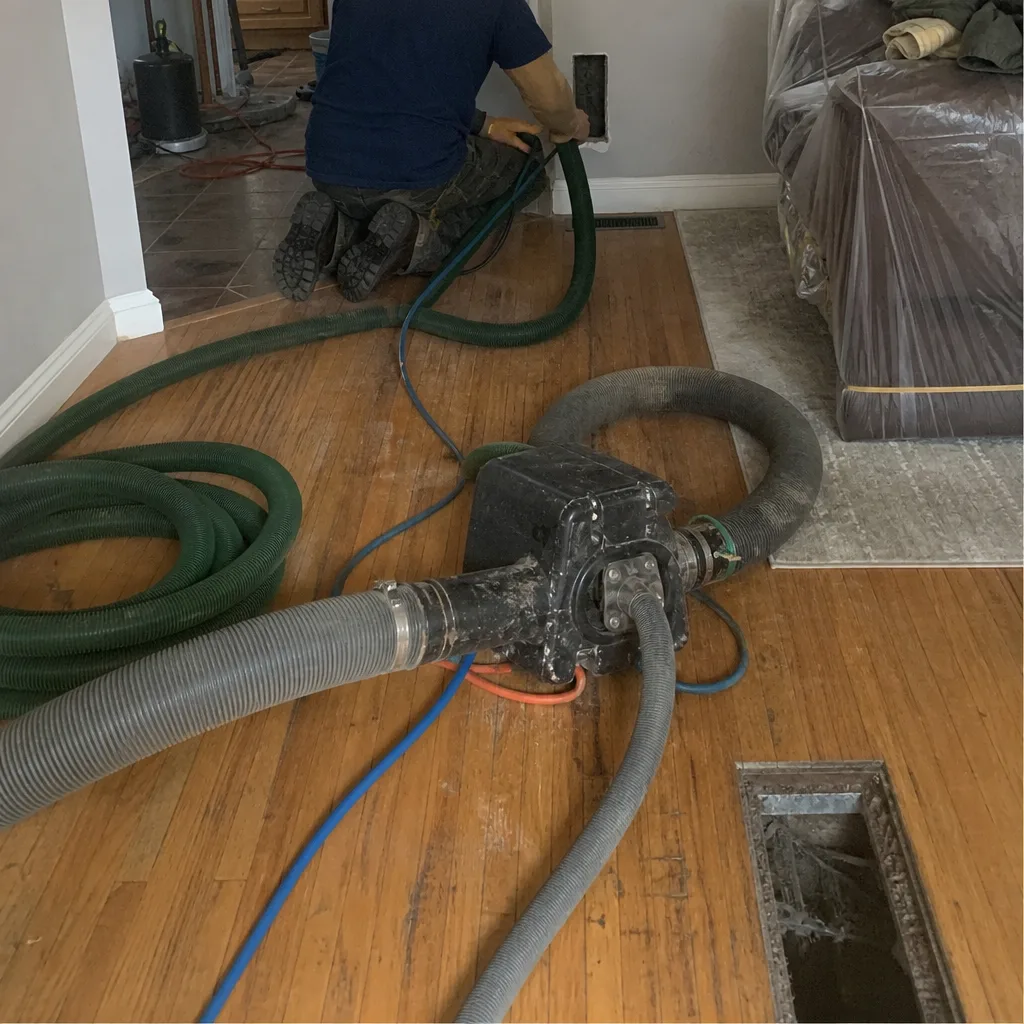 Before
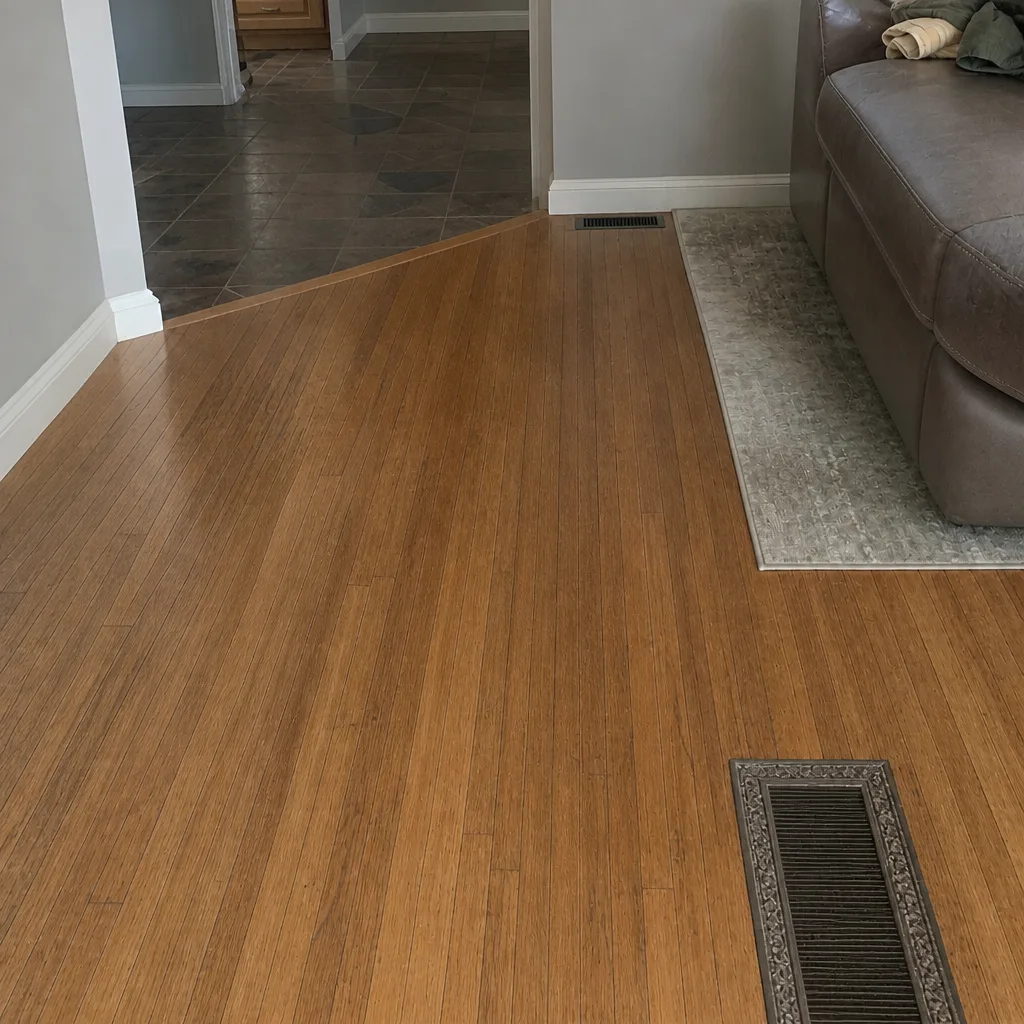 After
When to Call a Professional
You should call a professional when the symptom points to ductwork and not just to a filter. If anyone in the home has allergy symptoms that seem worse indoors, if a musty smell shows up when the system starts, if some rooms get noticeably less airflow than others, or if the dryer is taking longer than it used to, those are duct system signals. So is a recent remodel, a kitchen fire, or visible dust buildup around the registers. Homeowners in Roseville should also have the dryer vent looked at if it’s been more than a couple of years since the last cleaning, because lint buildup is a fire risk. Duct Cleaning Roseville offers free estimates in Roseville. Call (855) 473-9048. We answer 24/7. Fast dispatch from 7am to 7pm, Sunday through Friday.
Frequently Asked Questions
Air duct cleaning in Roseville is priced per whole system, not per vent, and the written estimate sets the final price. We don’t quote a per-vent number, because a per-vent price encourages a company to define “a vent” however suits the invoice. Ask for the whole-system scope in writing before you book anything. Call (855) 473-9048 for an exact quote. Estimates are free.
Cheap quotes are usually cheaper for a reason: less equipment, less time on site, and sometimes a smaller scope than the coupon implies. A company running Rotobrush, Nikro and Abatement Technologies equipment invested in that capacity, and the price reflects it. The lower quote is not automatically bad, but you should ask which equipment arrives, how long the crew is on site, and whether the work includes the full system. Call (855) 473-9048 if you want the scope explained before you commit.
Ask for before-and-after photos of your own ducts. That’s the single most reliable verification step, and any company confident in its work should offer it without being asked. In our process, we photograph the ducts as part of the job so the homeowner sees the actual change, not a generic stock photo. Call (855) 473-9048 if you want to talk through what the photos will show in a specific home.
Most homes don’t need it on a fixed schedule. The honest answer is that it depends on the home, the duct material, whether there’s been a remodel or pets in the house, and whether symptoms have appeared. Homes with flex duct, recent construction activity nearby, or allergy sufferers often benefit more often than homes with rigid duct and stable conditions. If you’re not sure, call (855) 473-9048 and we can talk through what a reasonable interval looks like for your Roseville home.
They do different jobs. Rotobrush is a brush-agitation system that physically contacts the duct walls to break compacted debris loose. Nikro is a HEPA-rated vacuum extraction system that captures what’s been dislodged. The best cleaning uses both, because one without the other leaves half the problem unsolved. A contractor running both systems is treating the ducts as a two-part job, which is what it is. Call (855) 473-9048 if you want the equipment setup explained for your specific home.
Not if the cleaning company also offers air duct repair as a service. We do, which means a cleaning visit that uncovers a disconnected joint or a crushed run doesn’t require a second company, a second estimate, or a wait between the cleaning and the repair. Ask any contractor you’re considering whether repair is available before you book. Call (855) 473-9048 if you already know there’s damage and want to talk through the repair scope.
The Bottom Line
The brand question in duct cleaning is really an equipment question, and the answer is: match the system to the problem. Rotobrush handles brush-agitation for compacted debris in flex duct. Nikro handles high-capacity HEPA extraction. Abatement Technologies handles containment-grade work when the situation calls for it. A contractor who operates all three has the versatility to do a proper job in a Roseville home; one who operates a single system will apply that system to every job, whether or not it fits. Ask for model numbers, verify the specs, confirm operator training, and get the scope in writing before anyone arrives. The written estimate is what sets the final price, and the equipment is what sets the outcome.
If you want to talk through your ducts with the team that runs this equipment daily, call Duct Cleaning Roseville at (855) 473-9048 for a free estimate. Our technicians have up to 9 years of experience with these systems, and we’ll give you a straight answer about what your Roseville home actually needs. Our coverage area is Roseville and the surrounding neighborhoods, and we’re happy to walk you through the equipment, the process, and the estimated cost before you commit to anything.
Written by the team at Duct Cleaning Roseville.